
ATCS for Data Center Chillers in Southeast Asia
Data center PUE is sensitive to chiller efficiency. Fouled condensers push compressors harder, raising both energy bills and the risk of thermal overload during peak IT load.
Looking for the full data-center cooling playbook? Our Specialized Solutions for Data Center Cooling Systems shows how pairing the ATCS online tube cleaning system with a Coolant Distribution Unit (CDU) reduces condenser approach temperature and lowers PUE — the same architecture behind our published case studies.
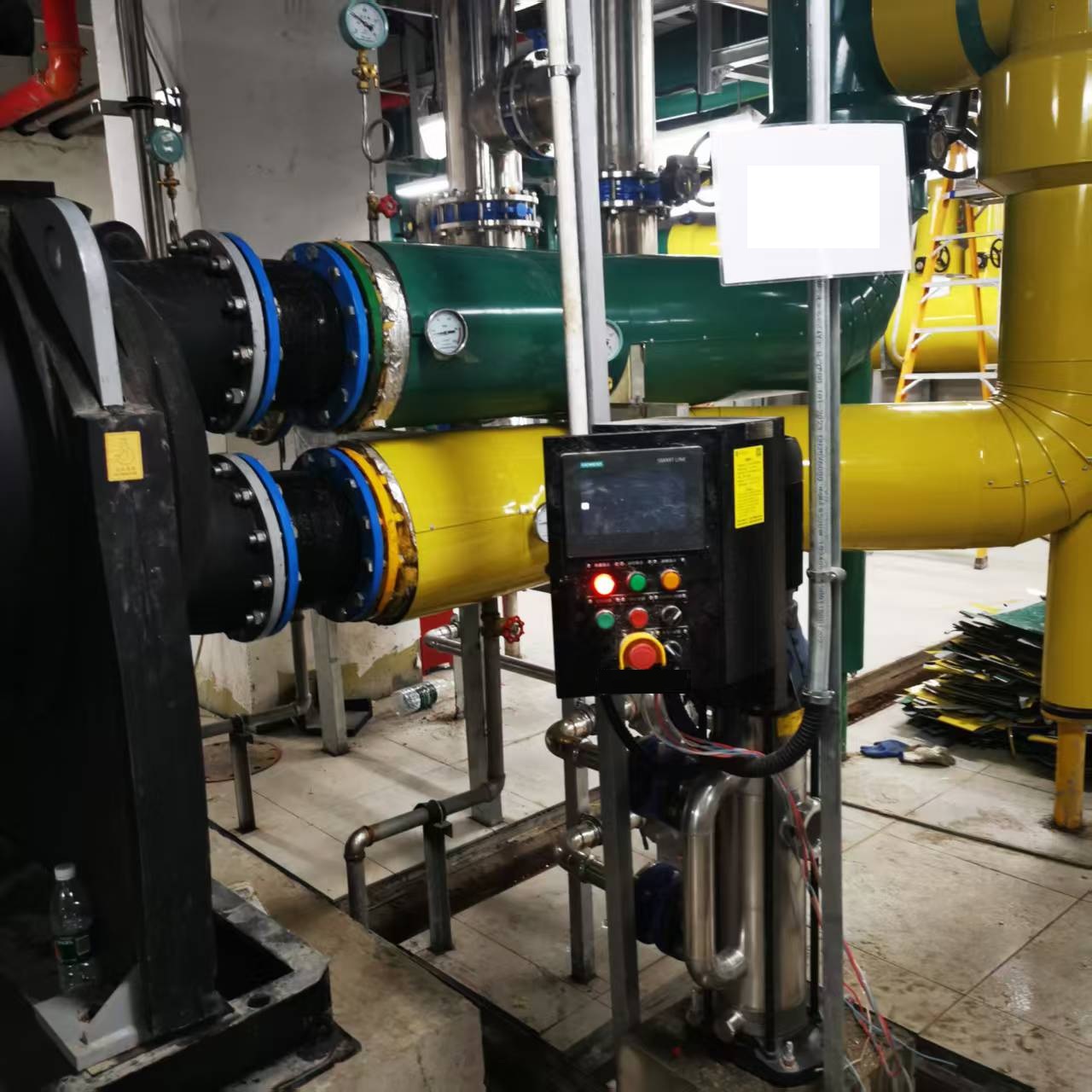
Key Benefits for Data Centers
Stabilize PUE
Keep water-cooled chillers at design COP all year.
Reduce Human Intervention
Automated cleaning removes manual tube brushing from maintenance windows.
Support Uptime Targets
Clean condensers are less likely to trip on high pressure.
BMS/DCIM Integration
Cleaning status feeds into the facility monitoring dashboard.
Typical System Configuration
Data center ATCS units are compact and selected for low pressure drop. We integrate with common chiller protocols and DCIM platforms via Modbus TCP.
| Item | Specification |
|---|---|
| Applicable tube ID | 12 – 30 mm (custom up to 45 mm) |
| Ball material | EPDM, oil and seawater resistant |
| Collector material | Carbon steel / 316L SS / Duplex SS |
| Control | Siemens PLC, Modbus/BACnet to BMS |
| Communication | Remote monitoring and alarm feedback |
Frequently Asked Questions
Fouling, PUE and the Redundancy You Thought You Had
Data centre cooling is designed around a redundancy margin — N+1, 2N or something in between. That margin is calculated on the assumption that each chiller delivers its design capacity. Condenser fouling quietly erodes that assumption: a machine that has lost 8% of its capacity still appears in the redundancy calculation as a full machine.
This is the part that matters more than the energy bill. A data centre does not usually lose money because its PUE moved from 1.45 to 1.52; it loses money when an unplanned event coincides with less cooling capacity than the operations team believed was available. Fouling does not cause the event, but it shrinks the margin that was supposed to absorb it.
The operating profile compounds the accumulation problem. Data centres run around the clock at relatively steady load, in contrast to a commercial building that cycles down overnight and at weekends. Steady-state operation means steady deposition, with no low-load periods where a plant might partially recover. Over a full year of continuous running, that adds up.
Continuous online cleaning keeps each machine at or near its design capacity, so the redundancy margin stated on the drawings is the margin actually available. It also removes the awkward scheduling question of when a data centre can ever afford to take a chiller offline for cleaning.
What We Ask For on a Data Centre Project
| Item | Why it matters |
|---|---|
| Chiller capacity and count | Sizing per machine and total cleaning loop count |
| Redundancy scheme (N+1 / 2N) | Determines whether cleaning must run during maintenance on other units |
| Water source and treatment type | Scaling vs biological risk balance |
| BMS trend access | Enables approach temperature analysis before quoting |
Data Centre Questions
How much PUE improvement is realistic?
It depends on how much of your total facility load is chiller compressor power and how fouled the condensers are today. In a plant with a meaningful cooling load and a measurable approach temperature lift, the compressor energy recovered shows up in PUE directly. In a plant already running clean, the honest answer is that there is little to recover — which we would rather tell you than quote a number we cannot defend.
Does installation risk an outage?
The condenser water connections require the machine to be isolated, so installation is scheduled machine by machine within your change-management process and never takes the whole plant down. For facilities with N+1 or better, this is normally a non-event in availability terms.
Can it be monitored from our DCIM or BMS?
Yes. The control panel can be integrated for status, alarm and run-hour reporting through standard industrial protocols, so cleaning system health appears alongside the rest of your mechanical infrastructure rather than as a standalone device nobody checks.
Does this work with water-cooled and air-cooled plant?
Sponge ball cleaning requires tubes with a circulating water path, so it applies to water-cooled condensers. Air-cooled and adiabatic-cooled plant has a different maintenance problem — fin fouling rather than tube fouling — and is not addressed by this equipment. If your site is mixed, we will scope only the water-cooled portion.
Why Data Centers Rely on ATCS for Chiller Efficiency
In a data center, the cooling plant is the single largest energy consumer — chillers alone can account for 30–40% of total facility power. Because data-center condensers run 24/7 under a high, stable heat load, any fouling on the condenser tubes immediately raises condensing pressure and cuts chiller COP. An Automatic Tube Cleaning System (ATCS) keeps every condenser tube continuously clean, directly protecting PUE and uptime.
How ATCS Works in a Data-Center Plant — 4 Steps
- Continuous duty: sponge rubber balls circulate through the condenser tubes on a timed cycle (every 20–40 min), scrubbing the inner wall before fouling can bond.
- Ball recovery: a strainer/trap at the condenser outlet collects the balls and returns them to the reservoir for the next cycle.
- No shutdowns: cleaning is fully online — chillers and condensers never have to be taken off-line.
- Centralized control: the ATCS skid PLC ties into the BMS/PLC, with alarms on low ball count or flow deviation.
ATCS vs. Manual / Offline Cleaning
| Method | How It Works | Chiller Downtime | COP Impact | Best For |
|---|---|---|---|---|
| Manual brush / acid | Shut condenser, brush or acid clean | High (hours) | Restores only after outage | Infrequent, small sites |
| Online descaling | Periodic chemical dosing | Medium | Temporary | Legacy plants |
| ATCS (this system) | Continuous automated ball cycling | Zero | Maintains peak COP | 24/7 mission-critical (data centers) |
Key Technical Parameters
| Typical Specification Range | |
| Ball / tube-ID match | 1–3 mm larger than tube bore |
| Cycle interval | 20–40 min |
| Ball grade | 40–70 Shore A (sponge rubber) |
| Compatible tube Ø | 16–32 mm |
| Redundancy | None — single duty pump |
| Ball life | 6–18 months |
Why Choose ATCS for Data Centers?
- Protects PUE — clean condensers hold chiller COP, directly cutting kWh per IT watt.
- Uptime — no planned shutdowns for tube cleaning; cooling never stops.
- Lower OPEX — less compressor work, fewer chemical doses, longer tube life.
- Sustainability — reduced energy and chemical use supports ESG and carbon targets.
Get a Data Centers ATCS Quote
Tell us your chiller / condenser model, cooling capacity and water quality. We reply within 24 hours with a tailored solution and ROI estimate.
Prefer email? Write to michealzhang969@gmail.com
{“@context”:”https://schema.org”,”@type”:”FAQPage”,”mainEntity”:[{“@type”:”Question”,”name”:”Is ATCS suitable for hyperscale data center chillers?”,”acceptedAnswer”:{“@type”:”Answer”,”text”:”Yes. We scale the collector and ball count to match large centrifugal or screw chillers and can mirror the redundant chiller layout.”}},{“@type”:”Question”,”name”:”Can it work with variable-primary chilled-water systems?”,”acceptedAnswer”:{“@type”:”Answer”,”text”:”Yes. The cleaning cycle is triggered by time or condenser pressure, independent of chilled-water flow variations.”}},{“@type”:”Question”,”name”:”Does ATCS reduce maintenance visits?”,”acceptedAnswer”:{“@type”:”Answer”,”text”:”Absolutely. Once commissioned, the only regular task is topping up balls when the PLC alerts you.”}}]}
Related Documented Case Studies
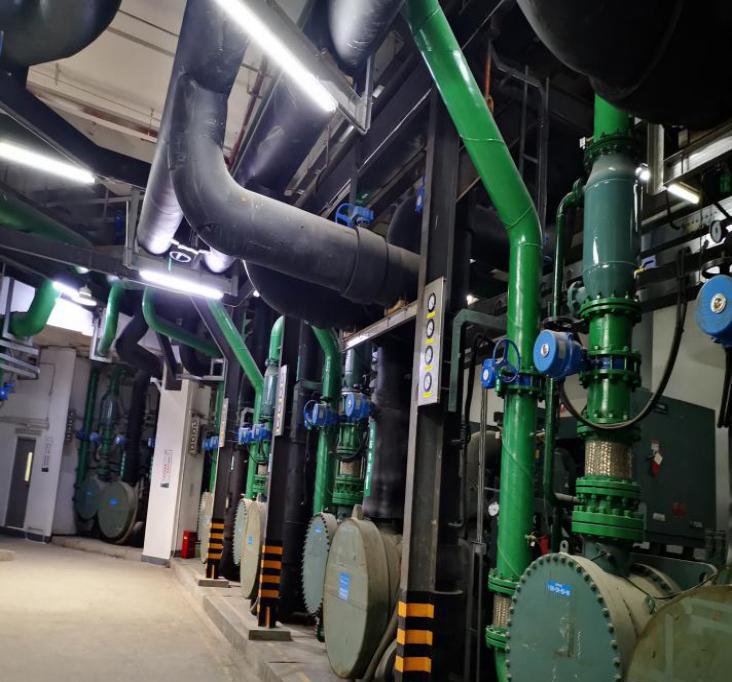
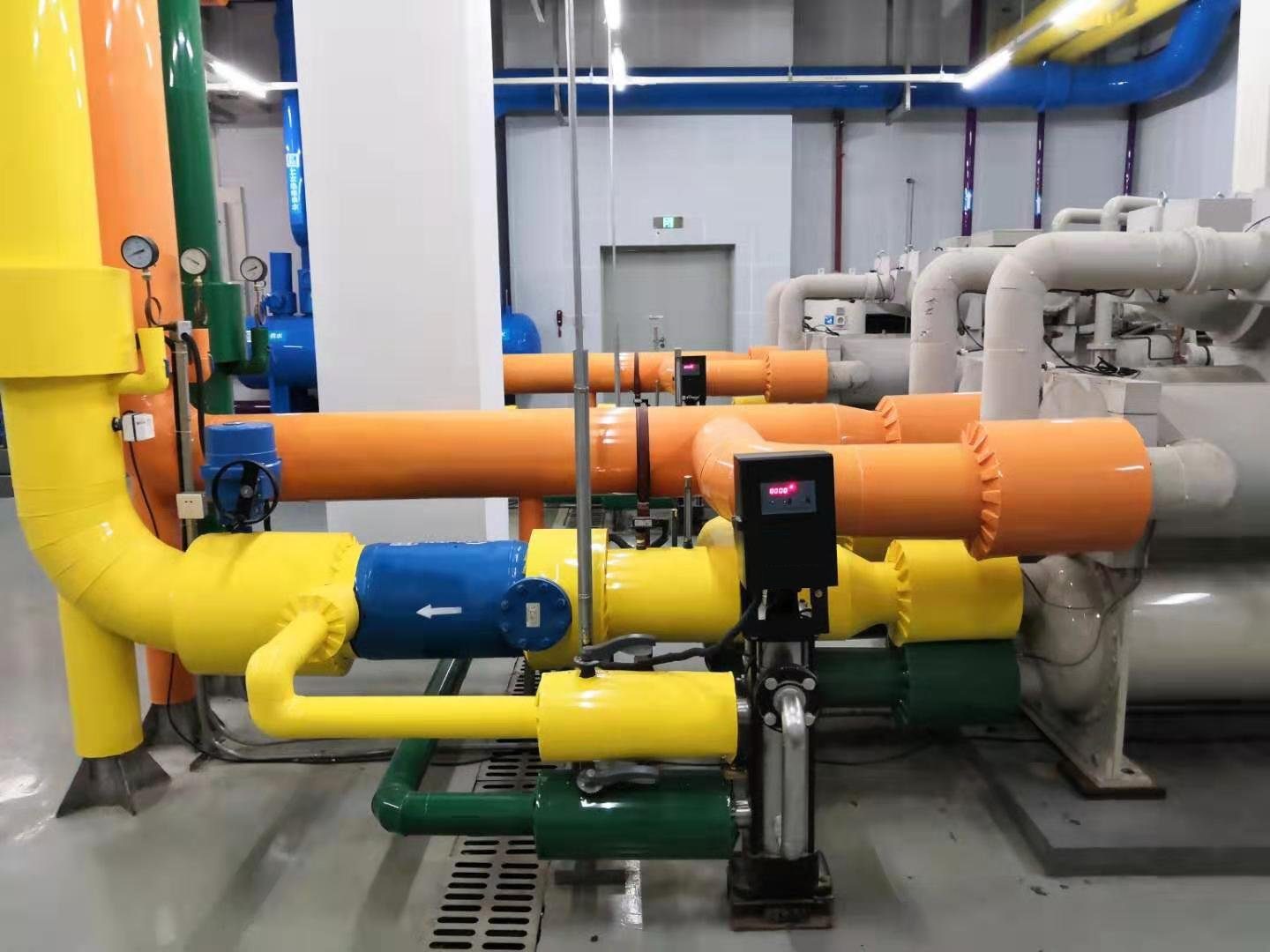
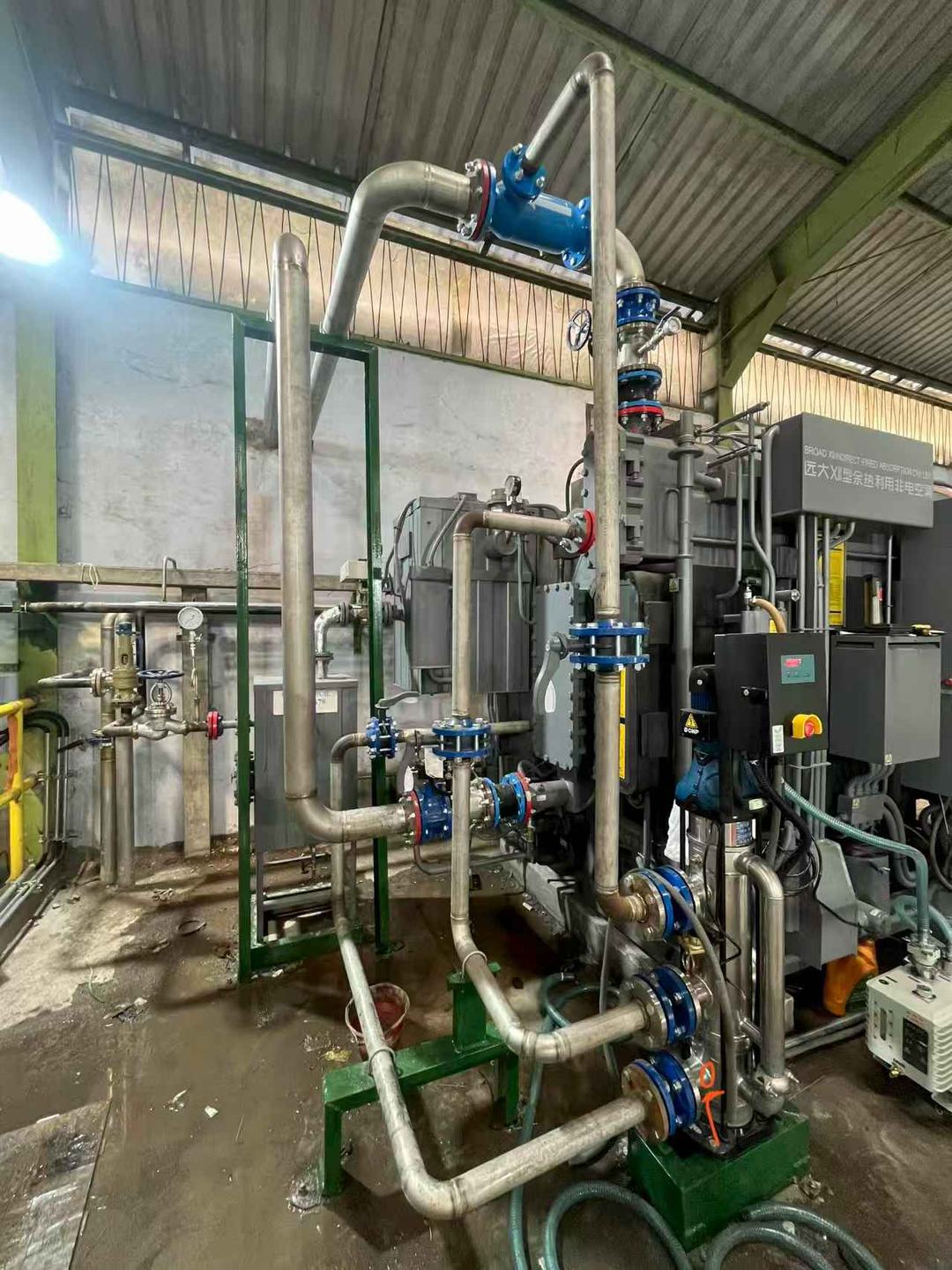
See the HyApexFlow automatic condenser tube cleaning system (ATCS) proven in the field:
Related: Data Center Cooling Solutions.
Data Center Condenser Cleaning System — Technical Specification Checklist
When operators shortlist an Automatic Tube Cleaning System for Data Centers, the same requirements appear in every RFP. HyApexFlow’s ball-type ATCS — also referenced as a Chiller Tube Cleaning System or Data Center Condenser Cleaning System — is engineered as a continuous, no-shutdown Energy Saving HVAC Solution that meets them:
| Data-Center Requirement | HyApexFlow ATCS |
|---|---|
| BMS / DCIM integration | BACnet and Modbus TCP/IP signals: cleaning-cycle status, ball inventory, pump status, alarm output |
| Redundancy for critical sites | None — one duty pump per unit, protected by automatic fault alarms |
| Corrosion-resistant materials | 316L stainless steel wetted parts; seawater-compatible options for coastal campuses |
| Energy-performance evidence | 5–15% chiller-energy recovery versus a fouled baseline (≈0.05–0.15 kW/RT), documented on live sites |
| 24/7 with no outage | Online cleaning while the chiller runs — no shutdown, no chemicals |
| Tropical / seawater duty | High-temperature-resistant cleaning balls for Singapore, Malaysia, Indonesia and the Middle East |
| Easy maintenance | Tool-free ball replacement with minimal spare parts |
Documented on live mission-critical and data-center sites including PDG Malaysia and Hilton — see Related Documented Case Studies.
Related: BMS & DCIM Integration for ATCS (BACnet / Modbus) — monitoring point list, protocols and platform compatibility.
Related Solutions
- ATCS Energy Savings & ROI Calculator
- Materials & Engineering (SS316L / Titanium / Cu-Ni)
- Mission-Critical Reliability (N+1 Redundancy)
- ATCS for Southeast Asia Data Centers
- ATCS Resources & Downloads
- Quality & Compliance
- Why HyApexFlow
- Chinese vs European ATCS
Explore ATCS by Application
- ATCS for District Cooling Plants
- ATCS for Power Plant Condensers
- ATCS for Lithium Bromide Absorption Chillers
- ATCS for Hotel HVAC
- ATCS Retrofit Installation Guide
- How Condenser Fouling Increases Energy Consumption
Documented References
See our Documented References & Track Record for publicly disclosed project types and application sectors across Southeast Asia and the Middle East.
Frequently Asked Questions
What is ATCS for data centers?
An automatic tube cleaning system that keeps condenser tubes clean online, stabilizing approach temperature and reducing chiller energy use — directly lowering data-center PUE.
Does HyApexFlow ATCS require chiller downtime?
No. Cleaning runs online without stopping the chiller.
Can it integrate with data-center BMS?
Yes, via a standard Modbus TCP point list and energy-KPI reporting.
Explore more in our Automatic Condenser Tube Cleaning (ATCS) →